Event Agenda
 Filters
Clear All
Filters
Clear All
Monday, 13 April 2026
Exhibitor Setup
Attendee and Exhibitor Badge Pickup
Exhibit Hall Open
Exhibit Hall Open
Be sure to visit the 70+ exhibits located on the first floor in the Intracoastal Ballroom and Foyer. Explore innovative products, solutions, and demos designed for the MPE community.
Registration Mixer
Registration Mixer
Pick up your summit badge, and then join your colleagues to network, catch up, and kickoff your Summit experience!
Compliments of:

Tuesday, 14 April 2026
Attendee and Exhibitor Badge Pickup
Exhibit Hall Open
Exhibit Hall Open
Be sure to visit the 70+ exhibits located on the first floor in the Intracoastal Ballroom and Foyer. Explore innovative products, solutions, and demos designed for the MPE community.
Kickoff and Announcements

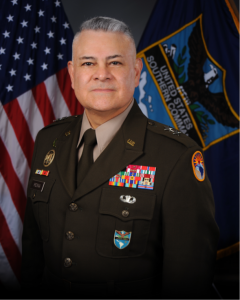
MPE Enterprise Capability

MPE Enterprise Capability
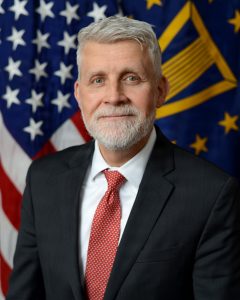
Mr. Creswell will provide a foundational deep dive into the modernization of MPE, introducing the Coalition Information Environment (CIE) as the core capability framework for the future. This session will detail the components of CIE including enterprise services, C2 tools, future service catalog, and enabling CIE through active cybersecurity operations. Attendees will gain clear understanding of the CIE capabilities and the path to delivering Minimum Viable Capability Requirement (MVCR) in 2027.
Exhibit Hall Networking Break
Exhibit Hall Networking Break
Be sure to visit the 70+ exhibits located on the first floor in the Intracoastal Ballroom and Foyer. Explore innovative products, solutions, and demos designed for the MPE community.
MPE Transition Status

MPE Transition Status
DoW CIO will brief the status of MPE activities transitioning from the DAF to DoW CIO and DISA. The discussion will include details on the transition of personnel and resources to DoW CIO and DISA, the completed and pending activities, the timeline for completion, and updates to MPE governance.
Joint/Combined Digital Modernization Panel: Experimentation, Demonstration, and Operationalization
Joint/Combined Digital Modernization Panel: Experimentation, Demonstration, and Operationalization
A moderated panel discussion with subject matter experts who are improving the warfighter’s ability to rapidly and securely share information and exchange data with mission partners by employing zero trust and data-centric-security. Hear how implementers are employing digitally modernized capabilities to meet the operational demands of commander’s to share information at the speed-of-relevance. This discussion will highlight what’s working, what still needs work, and current status of operational implementation, based on lessons learned from the actual experimentation and demonstration of operationalized data-centric capabilities.
Lunch and Exhibit Hall Networking Break
Lunch and Exhibit Hall Networking Break
Lunch will be on your own during the scheduled break. Attendees are encouraged to explore nearby dining options and take time to visit the Exhibit Hall to connect with participating vendors.
Working Group 1: Architecture/Integration
Working Group 1: Architecture/Integration
Purpose: This working group will explore how we will treat non-tagged data objects going into and out of a DCS environment.
Prep Work: Attendees of the WG are asked to be familiar with the ACP-240 and review the standard prior to the summit.
Key Topics for Discussion/Objectives:
- Approaches to handle non-tagged data objects and how they are brought into and out of a DCS environment to include structured and unstructured data
- Relationship to the data integration layer and the architecture / integration with C2 tools
- Machine to Machine and Human data interactions will be explored
Summit 26-1 Desired Outcome: A documented approach (may be multiple) to test during upcoming experimentation events.
Working Group 2: ICAM & Zero Trust Design
Working Group 2: ICAM & Zero Trust Design
This working group is the core of the MPE modernization effort insuring federated credentialed access and implementing a data-centric security model. This working group will accelerate ICAM adoption and integration through the development of interoperable ICAM standards for joint and allied operations required to interconnect US and mission partner environments. The discussion will address the specific Identity, Credential, and Access Management (ICAM) and Zero Trust (ZT) capabilities that support Attribute-Based Access Control (ABAC) as the primary mechanism for isolating data.
Key Topics for Discussion:
• Accelerate ICAM adoption and integration
• Federating Identities: Aligning on Enterprise User Attributes and Self-Service Functionality
• Identity-centric models for decision-making, collaboration, and compliance.
• Data-Centric Security in Practice: Data Tagging, Content Labeling, and Digital Rights Management
• Implement Zero Trust ICAM architecture with Artificial Intelligence and Machine Learning driven threat detection
Objective for Partners: To collaboratively shape a unified ICAM/ZT strategy and ensure partners have a clear understanding of the policies, standards, and technical evidence needed to demonstrate compliance.
Working Group 3: Command and Control (C2) Integration
Working Group 3: Command and Control (C2) Integration
This working group coordinates C2 apps rationalization within the MPE enterprise. This includes how joint & combined management of common operating picture (COP) and common intelligence picture (CIP) are fused to visualize and provide data in a useful manner, federation across coalition environments, data requirements for feeding COP/CIPs. Discussions will center on authoritative data ownership, releasability enforcement, identity federation, and cross-domain integration. The objective is to move from network connectivity to decision advantage by establishing a common framework for coalition C2 integration.
Key Topics for Discussion:
•Identifying common data layer requirements
•Coalition COP federation architecture (hub, peer, brokered, or data fabric models)
•Authoritative data sources and track ownership
•GCCJ/SPINE/C2 coalition integration requirements
•AI-enabled COP integration (data access, transparency, and output management)
•Releasability standards and metadata/tagging alignment
•COP governance, configuration management, and adjudication processes
Objective for Partners: Develop/participate in shared framework for integrating national C2 systems into a federated coalition COP within MPE, along with defined technical, security, and governance expectations. The working group will identify actionable priorities to improve interoperability, reduce decision latency, and establish predictable standards for participation in coalition C2 operations.
Senior Leadership Exhibit Hall Tour/Vendor Demonstrations
Senior Leadership Exhibit Hall Tour/Vendor Demonstrations
Closing Remarks/Wrap Up
Wednesday, 15 April 2026
Attendee and Exhibitor Badge Pickup
MPE New Horizons

MPE New Horizons
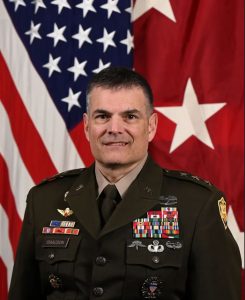
Building on the technical foundation of the “MPE Enterprise Capability” from Day 1, LTG Stanton provides the strategic "why" behind this critical modernization. Attendees will gain insights of why DISA is actively evolving MPE towards data-centric security, Zero Trust architecture for a more agile, secure, and interoperable future for all mission partners. LTG Stanton will explain how this unified effort supports broader imperatives like CJADC2, MNaaS and coalition mission threads. The presentation will detail why a new architecture enabling micro-segmentation is critical, and how this vision will reduce our reliance on legacy Cross-Domain Solutions (CDS) to build a more agile and secure future for coalition operations.
Olympus Fires
Olympus Fires
An operational demonstration happening in conjunction with the biannual J6 sponsored BOLD QUEST event, occurring in October 2026. Olympus Fires is focused on the ability of the Combined/Joint force to execute improved C2 and Fires functions within a secure, distributed, Data-Centric-Security (DCS), Zero Trust (ZT), cloud environment.
Exhibit Hall Networking Break
Exhibit Hall Networking Break
Be sure to visit the 70+ exhibits located on the first floor in the Intracoastal Ballroom and Foyer. Explore innovative products, solutions, and demos designed for the MPE community.
USSOUTHCOM MPE Operations
Working Group 1: Architecture/Integration
Working Group 1: Architecture/Integration
Purpose: This working group will explore how we will treat non-tagged data objects going into and out of a DCS environment.
Prep Work: Attendees of the WG are asked to be familiar with the ACP-240 and review the standard prior to the summit.
Key Topics for Discussion/Objectives:
- Approaches to handle non-tagged data objects and how they are brought into and out of a DCS environment to include structured and unstructured data
- Relationship to the data integration layer and the architecture / integration with C2 tools
- Machine to Machine and Human data interactions will be explored
Summit 26-1 Desired Outcome: A documented approach (may be multiple) to test during upcoming experimentation events.
Working Group 2: ICAM & Zero Trust Design
Working Group 2: ICAM & Zero Trust Design
This working group is the core of the MPE modernization effort insuring federated credentialed access and implementing a data-centric security model. This working group will accelerate ICAM adoption and integration through the development of interoperable ICAM standards for joint and allied operations required to interconnect US and mission partner environments. The discussion will address the specific Identity, Credential, and Access Management (ICAM) and Zero Trust (ZT) capabilities that support Attribute-Based Access Control (ABAC) as the primary mechanism for isolating data.
Key Topics for Discussion:
• Accelerate ICAM adoption and integration
• Federating Identities: Aligning on Enterprise User Attributes and Self-Service Functionality
• Identity-centric models for decision-making, collaboration, and compliance.
• Data-Centric Security in Practice: Data Tagging, Content Labeling, and Digital Rights Management
• Implement Zero Trust ICAM architecture with Artificial Intelligence and Machine Learning driven threat detection
Objective for Partners: To collaboratively shape a unified ICAM/ZT strategy and ensure partners have a clear understanding of the policies, standards, and technical evidence needed to demonstrate compliance.
Working Group 3: Command and Control (C2) Integration
Working Group 3: Command and Control (C2) Integration
This working group coordinates C2 apps rationalization within the MPE enterprise. This includes how joint & combined management of common operating picture (COP) and common intelligence picture (CIP) are fused to visualize and provide data in a useful manner, federation across coalition environments, data requirements for feeding COP/CIPs. Discussions will center on authoritative data ownership, releasability enforcement, identity federation, and cross-domain integration. The objective is to move from network connectivity to decision advantage by establishing a common framework for coalition C2 integration.
Key Topics for Discussion:
•Identifying common data layer requirements
•Coalition COP federation architecture (hub, peer, brokered, or data fabric models)
•Authoritative data sources and track ownership
•GCCJ/SPINE/C2 coalition integration requirements
•AI-enabled COP integration (data access, transparency, and output management)
•Releasability standards and metadata/tagging alignment
•COP governance, configuration management, and adjudication processes
Objective for Partners: Develop/participate in shared framework for integrating national C2 systems into a federated coalition COP within MPE, along with defined technical, security, and governance expectations. The working group will identify actionable priorities to improve interoperability, reduce decision latency, and establish predictable standards for participation in coalition C2 operations.
Data Centric Security (DCS)/ACP240 Industry Engagement
Lunch
Lunch
Lunch is on your own during the designated lunch break. Many nearby options are within walking distance, please stop by the registration desk for a list. The Hilton’s restaurant does not open until dinner, but the pool bar does have lunch options available. Please remove your badge when leaving the hotel.
Working Group 1: Architecture/Integration
Working Group 1: Architecture/Integration
Purpose: This working group will explore how we will treat non-tagged data objects going into and out of a DCS environment.
Prep Work: Attendees of the WG are asked to be familiar with the ACP-240 and review the standard prior to the summit.
Key Topics for Discussion/Objectives:
- Approaches to handle non-tagged data objects and how they are brought into and out of a DCS environment to include structured and unstructured data
- Relationship to the data integration layer and the architecture / integration with C2 tools
- Machine to Machine and Human data interactions will be explored
Summit 26-1 Desired Outcome: A documented approach (may be multiple) to test during upcoming experimentation events.
Working Group 2: ICAM & Zero Trust Design
Working Group 2: ICAM & Zero Trust Design
This working group is the core of the MPE modernization effort insuring federated credentialed access and implementing a data-centric security model. This working group will accelerate ICAM adoption and integration through the development of interoperable ICAM standards for joint and allied operations required to interconnect US and mission partner environments. The discussion will address the specific Identity, Credential, and Access Management (ICAM) and Zero Trust (ZT) capabilities that support Attribute-Based Access Control (ABAC) as the primary mechanism for isolating data.
Key Topics for Discussion:
• Accelerate ICAM adoption and integration
• Federating Identities: Aligning on Enterprise User Attributes and Self-Service Functionality
• Identity-centric models for decision-making, collaboration, and compliance.
• Data-Centric Security in Practice: Data Tagging, Content Labeling, and Digital Rights Management
• Implement Zero Trust ICAM architecture with Artificial Intelligence and Machine Learning driven threat detection
Objective for Partners: To collaboratively shape a unified ICAM/ZT strategy and ensure partners have a clear understanding of the policies, standards, and technical evidence needed to demonstrate compliance.
Working Group 3: Command and Control (C2) Integration
Working Group 3: Command and Control (C2) Integration
This working group coordinates C2 apps rationalization within the MPE enterprise. This includes how joint & combined management of common operating picture (COP) and common intelligence picture (CIP) are fused to visualize and provide data in a useful manner, federation across coalition environments, data requirements for feeding COP/CIPs. Discussions will center on authoritative data ownership, releasability enforcement, identity federation, and cross-domain integration. The objective is to move from network connectivity to decision advantage by establishing a common framework for coalition C2 integration.
Key Topics for Discussion:
•Identifying common data layer requirements
•Coalition COP federation architecture (hub, peer, brokered, or data fabric models)
•Authoritative data sources and track ownership
•GCCJ/SPINE/C2 coalition integration requirements
•AI-enabled COP integration (data access, transparency, and output management)
•Releasability standards and metadata/tagging alignment
•COP governance, configuration management, and adjudication processes
Objective for Partners: Develop/participate in shared framework for integrating national C2 systems into a federated coalition COP within MPE, along with defined technical, security, and governance expectations. The working group will identify actionable priorities to improve interoperability, reduce decision latency, and establish predictable standards for participation in coalition C2 operations.
Closing Remarks/Wrap Up
Thursday, 16 April 2026
Attendee Badge Pick Up
Opening Remarks
Working Group 1: Architecture/Integration
Working Group 1: Architecture/Integration
Finalize Group Briefing
Purpose: This working group will explore how we will treat non-tagged data objects going into and out of a DCS environment.
Prep Work: Attendees of the WG are asked to be familiar with the ACP-240 and review the standard prior to the summit.
Key Topics for Discussion/Objectives:
- Approaches to handle non-tagged data objects and how they are brought into and out of a DCS environment to include structured and unstructured data
- Relationship to the data integration layer and the architecture / integration with C2 tools
- Machine to Machine and Human data interactions will be explored
Summit 26-1 Desired Outcome: A documented approach (may be multiple) to test during upcoming experimentation events.
Working Group 2: ICAM & Zero Trust Design
Working Group 2: ICAM & Zero Trust Design
Finalize Group Briefing
This working group is the core of the MPE modernization effort insuring federated credentialed access and implementing a data-centric security model. This working group will accelerate ICAM adoption and integration through the development of interoperable ICAM standards for joint and allied operations required to interconnect US and mission partner environments. The discussion will address the specific Identity, Credential, and Access Management (ICAM) and Zero Trust (ZT) capabilities that support Attribute-Based Access Control (ABAC) as the primary mechanism for isolating data.
Key Topics for Discussion:
• Accelerate ICAM adoption and integration
• Federating Identities: Aligning on Enterprise User Attributes and Self-Service Functionality
• Identity-centric models for decision-making, collaboration, and compliance.
• Data-Centric Security in Practice: Data Tagging, Content Labeling, and Digital Rights Management
• Implement Zero Trust ICAM architecture with Artificial Intelligence and Machine Learning driven threat detection
Objective for Partners: To collaboratively shape a unified ICAM/ZT strategy and ensure partners have a clear understanding of the policies, standards, and technical evidence needed to demonstrate compliance.
Working Group 3: Command and Control (C2) Integration
Working Group 3: Command and Control (C2) Integration
Finalize Group Briefing
This working group coordinates C2 apps rationalization within the MPE enterprise. This includes how joint & combined management of common operating picture (COP) and common intelligence picture (CIP) are fused to visualize and provide data in a useful manner, federation across coalition environments, data requirements for feeding COP/CIPs. Discussions will center on authoritative data ownership, releasability enforcement, identity federation, and cross-domain integration. The objective is to move from network connectivity to decision advantage by establishing a common framework for coalition C2 integration.
Key Topics for Discussion:
•Identifying common data layer requirements
•Coalition COP federation architecture (hub, peer, brokered, or data fabric models)
•Authoritative data sources and track ownership
•GCCJ/SPINE/C2 coalition integration requirements
•AI-enabled COP integration (data access, transparency, and output management)
•Releasability standards and metadata/tagging alignment
•COP governance, configuration management, and adjudication processes
Objective for Partners: Develop/participate in shared framework for integrating national C2 systems into a federated coalition COP within MPE, along with defined technical, security, and governance expectations. The working group will identify actionable priorities to improve interoperability, reduce decision latency, and establish predictable standards for participation in coalition C2 operations.
Networking Break
Working Group 1 Outbrief
Working Group 2 Outbrief
Working Group 3 Outbrief
Lunch
Lunch
Lunch is on your own during the designated lunch break. Many nearby options are within walking distance, please stop by the registration desk for a list. The Hilton’s restaurant does not open until dinner, but the pool bar does have lunch options available. Please remove your badge when leaving the hotel.